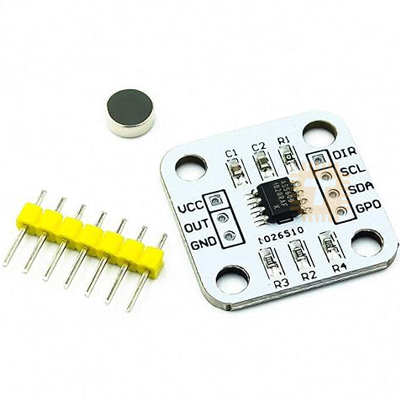
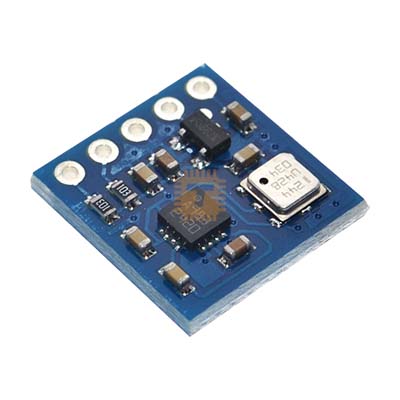
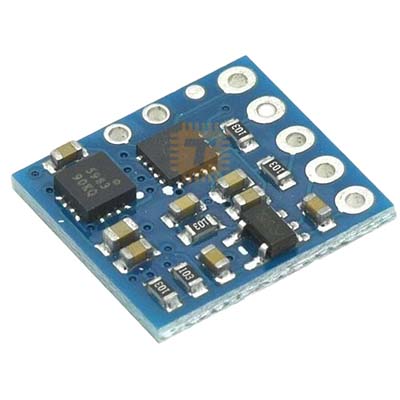
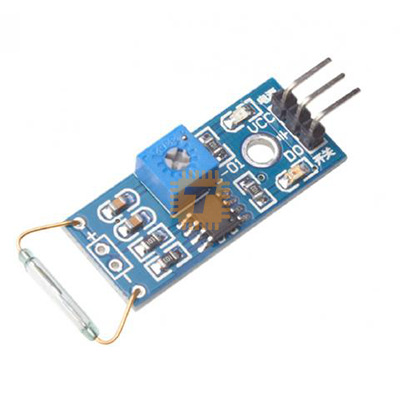
ADUM1201 Magnetic Isolator Module Replace Optocouplers CJMCU-1201
Price in Sri Lanka
Optocouplers and OptoisolatorsLight Sensor Modules
Tronic.lk

Rs 500
Out of stock
Updated 01 Nov 2026
Opening hours
Closed now
- Monday09:00 - 19:00
- Tuesday09:00 - 19:00
- Wednesday09:00 - 19:00
- Thursday09:00 - 19:00
- Friday09:00 - 19:00
- Saturday09:00 - 19:00
- SundayToday09:00 - 19:00
Search for it on
Description
The ADUM1201 (CJMCU-1201) is a high-speed, dual-channel digital isolator based on Analog Devices' proprietary iCoupler magnetic isolation technology. Designed as a modern, high-performance alternative to traditional optocouplers, it eliminates the speed limitations, power degradation, and large footprint issues common to light-based isolation. It provides robust galvanic isolation for high-speed digital communication lines like UART, SPI, and I2C.
Specifications
- Core Technology: Magnetic Induction (iCoupler technology)
- Channel Configuration: 2 Channels (Directional split: 2 inputs / 0 outputs, 1 input / 1 output, depending on the exact model sub-type; the ADUM1201 features a 1:1 bidirectional split: Channel A forward, Channel B reverse)
- Supply Voltage Range: 2.7V to 5.5V DC for both side 1 (VDD1) and side 2 (VDD2)
- Maximum Data Rate: Up to 25 Mbps (variant dependent)
- Isolation Voltage: Rated up to 2500V RMS
- High Common-Mode Transient Immunity: > 25kV/us
- Low Power Consumption: Significantly lower per channel than standard optocouplers (~1mA to 2mA)
- Operating Temperature: -40°C to +105°C
Interface & Pinout Guide
- V1 (VDD1): Power Supply Input for Side 1 (2.7V – 5.5V)
- G1 (GND1): Ground Reference for Side 1
- A1 (VIA / VOA): Channel A Input or Output on Side 1
- B1 (VIB / VOB): Channel B Input or Output on Side 1
- V2 (VDD2): Power Supply Input for Side 2 (2.7V – 5.5V)
- G2 (GND2): Ground Reference for Side 2
- A2 (VOA / VIA): Channel A Output or Input on Side 2
- B2 (VOB / VIB): Channel B Output or Input on Side 2
Note on Galvanic Isolation: For true electrical isolation, VDD1/GND1 and VDD2/GND2 must come from completely independent power sources. Connecting them to the same ground defeats the purpose of the isolator.
Key Features
- Superior Speed over Optocouplers: Unlike traditional phototransistor optocouplers (like the PC817) which struggle with data rates above a few kilohertz due to LED propagation delays, the ADUM1201 easily handles megabit-range signals, making it perfect for high-speed serial links.
- Bi-directional Data Paths: A single tiny chip handles data traveling in both directions simultaneously (e.g., TX and RX lines), reducing component count on your PCB.
- No LED Degradation: Traditional optocouplers lose efficiency over time as their internal infrared LEDs degrade. Magnetic isolation relies on micro-transformers, ensuring consistent performance throughout the component's lifespan.
- Logic Level Translation: Can act as a level shifter. For example, Side 1 can run on 3.3V logic while Side 2 runs on 5V logic, smoothly bridging different microcontrollers safely.
Common Applications
- High-Speed UART/Serial Isolation: Safely isolating TX/RX lines between main control boards and high-voltage peripherals or power electronics.
- Industrial Fieldbus Systems: Protecting microcontrollers connected to RS-232, RS-485, or CAN bus transceivers.
- Motor Control & Inverters: Isolating delicate PWM drive signals coming from an MCU to high-power gate drivers or H-bridges.
- Battery Management Systems (BMS): Isolating communication paths across stacked high-voltage battery banks to protect the master controller.
Usage Tips
- Bypass Capacitors: Always place a 0.1uF ceramic decoupling capacitor between VCC and GND on both sides of the module. These must be placed as close to the chip pins as possible to filter out high-frequency switching noise.
- Channel Directions: Verify your module's channel orientation before wiring. The standard ADUM1201 has one channel going from Side 1 to Side 2, and the second channel going from Side 2 to Side 1 (perfect for TX/RX configurations).
- Ground Seperation: Ensure that no traces, copper pours, or shielding bridge the physical gap underneath the chip on your chassis setup, as this can severely compromise the 2500V isolation barrier.
Frequently asked questions
What is the price of ADUM1201 Magnetic Isolator Module Replace Optocouplers CJMCU-1201 in Sri Lanka?▾
The current price of ADUM1201 Magnetic Isolator Module Replace Optocouplers CJMCU-1201 in Sri Lanka is Rs 500 at Tronic.lk.
Is ADUM1201 Magnetic Isolator Module Replace Optocouplers CJMCU-1201 available in Sri Lanka?▾
ADUM1201 Magnetic Isolator Module Replace Optocouplers CJMCU-1201 is currently out of stock at Tronic.lk in Sri Lanka.
Where can I buy ADUM1201 Magnetic Isolator Module Replace Optocouplers CJMCU-1201 in Sri Lanka?▾
You can buy ADUM1201 Magnetic Isolator Module Replace Optocouplers CJMCU-1201 in Sri Lanka at Tronic.lk. Visit 37left.lk to compare prices across multiple shops and find the best deal.
Loading...