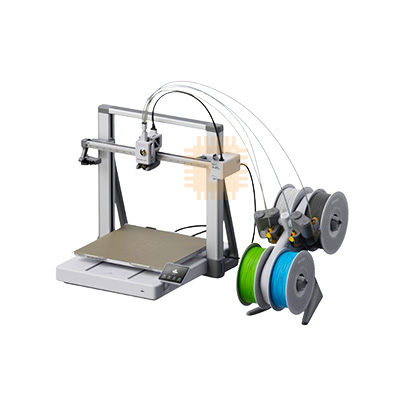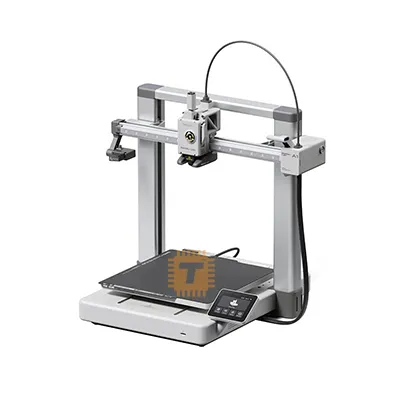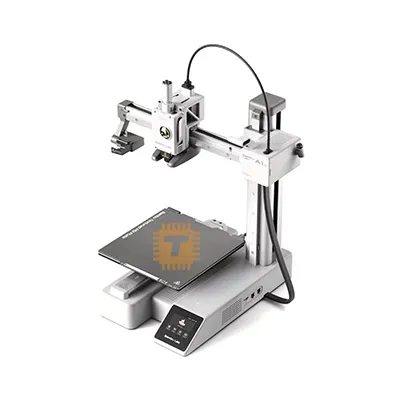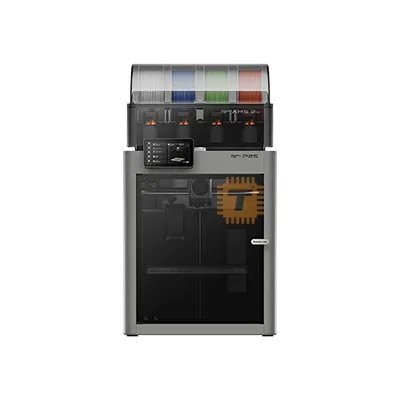
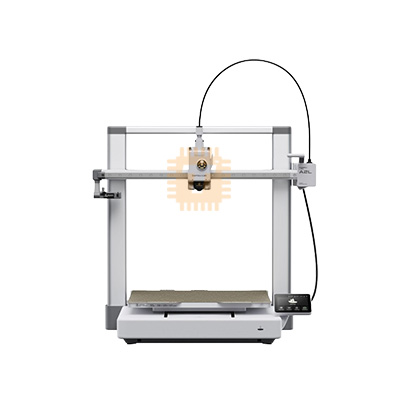
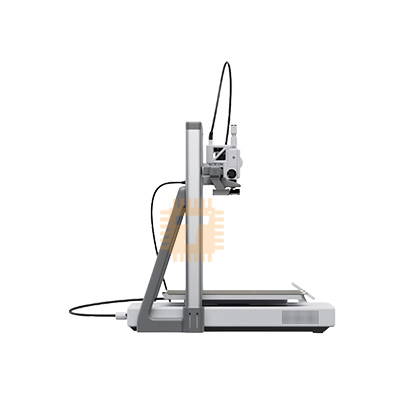
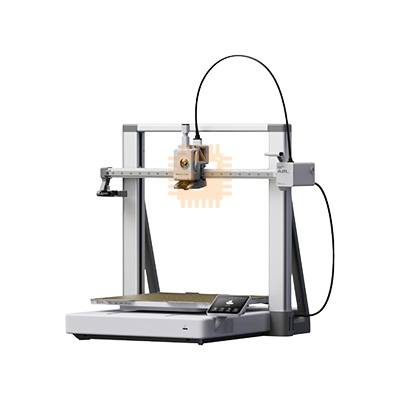
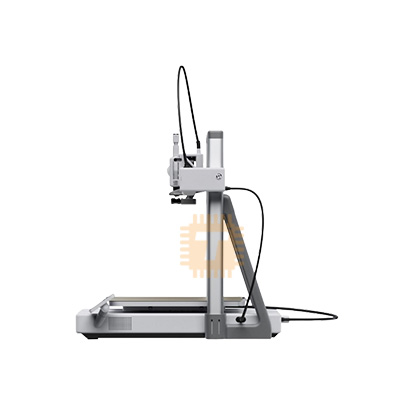
Bambu Lab A2L 3D Printer (Global Version) Price in Sri Lanka

Tronic.lkListing · checkedChecked 10 Nov 2026
Rs240,000In stock
Go to Tronic.lk ↗https://tronic.lk/product/bambu-lab-a2l-3d-printer-global-versionCall0777854444WhatsApp+94764485607
Search for it on
Price history
Price at Tronic.lk at the end of each day · last 90 daysNo price history yetWe started tracking this listing recently. The chart and change tables appear after the first price or stock change.
Price insights
- Today at Tronic.lk
- Rs240,000
Description
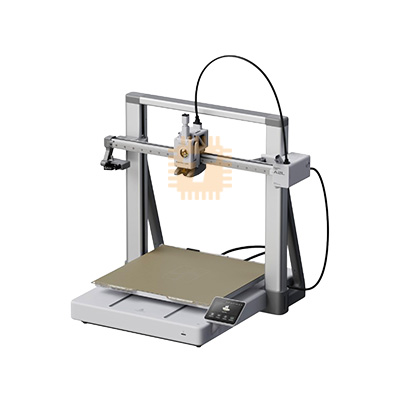
The Bambu Lab A2L (Global Version) is a large-format desktop FDM 3D printer engineered to bring plug-and-play reliability and multi-material flexibility to a generous build volume. Expanding upon Bambu Lab’s entry-level bed-slinger series, the A2L offers a 330 × 320 × 325 mm envelope—over double the volume of standard 256 mm class machines. It introduces dynamic mechanical stabilization, including real-time adaptive vibration compensation and aerospace-inspired granular gantry dampers, to eliminate motion artifacts on large, heavy builds. With native support for Bambu AMS units, automated flow dynamics calibration, a PMSM closed-loop servo extruder, and modular craft attachments (like pen plotting and blade cutting), the A2L functions as a high-speed, versatile manufacturing workstation for hobbyists, educators, and makers.
Specifications
- Print Technology: Fused Deposition Modeling (FDM / FFF)
- Build Volume: 330 × 320 × 325 mm
- Motion Architecture: Cartesian bed-slinger with precision linear guide rails
- Max Toolhead Speed: Up to 500 mm/s
- Max Acceleration: Up to 10 m/s² (10,000 mm/s²)
- Max Hotend Flow Rate: 28 mm³/s (PLA @ 220 °C)
- Extruder: Direct-drive PMSM closed-loop servo extruder with hardened steel gears
- Hotend & Nozzle: Quick-swap stainless steel nozzle (supports optional hardened steel); 0.4 mm included (0.2, 0.6, 0.8 mm compatible)
- Max Hotend Temperature: Up to 300 °C
- Max Heated Bed Temperature: Up to 80 °C
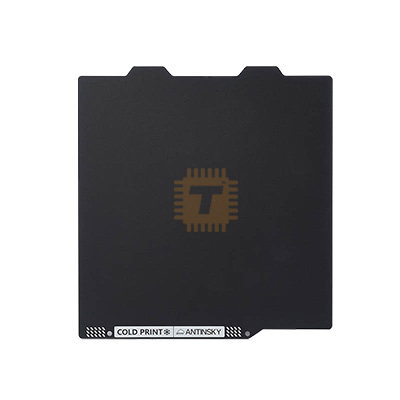
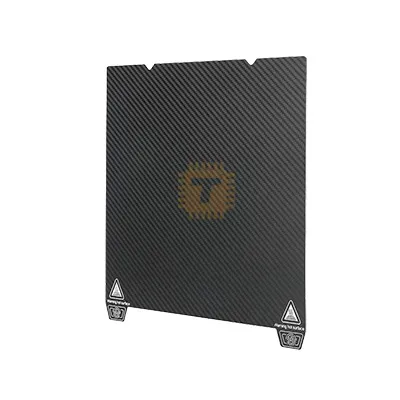
- Build Plate: Dual-sided textured PEI spring steel plate (compatible with Bambu Engineering Plate, Cool Plate, and SuperTack)
- Multi-Color / Material Ecosystem: Compatible with Bambu AMS Lite, enclosed 2nd-Gen AMS, AMS 2 Pro, and AMS HT (supports up to 19 colors across combined series configurations)
- Sensors & Monitoring: 1080p low-frame-rate monitoring camera (timelapse supported), nozzle clumping detector, filament odometry, tangle sensor, runout sensor, power loss recovery
- Modular Craft Functions: Optional toolhead-mounted blade cutting (300 × 300 mm area) and pen plotting (300 × 255 mm area)
- Acoustics & Air Quality: Active motor noise cancellation (~49 dB in Silent Mode); UL GREENGUARD certified (UL 2904)
- Control & Connectivity: 3.5-inch color touchscreen (240 × 320), 2.4 GHz Wi-Fi, Bambu-Bus, LAN-only mode, MicroSD slot (32 GB card supported)
- Software Ecosystem: Bambu Studio, Bambu Handy mobile app, MakerWorld direct-printing; standard G-code support (PrusaSlicer, OrcaSlicer, Cura)
- Machine Dimensions & Weight: 544 × 529 × 505 mm; ~12.8 kg (net)
Features
- Oversized 330 mm Build Capacity: Provides 105% more usable volume than standard 256 mm beds, allowing full-scale wearable helmets, large architectural models, or mass-batch production runs to be printed in one piece without sectioning.
- Adaptive Vibration Compensation & Granular Dampers: Unlike conventional input shaping that calibrates once at rest, the A2L's adaptive matrix continuously recalculates resonance frequencies as the printed model grows taller and heavier. Dual sealed granular dampers inside the gantry dissipate physical micro-vibrations to suppress ringing and ghosting.
- Closed-Loop PMSM Extruder & Auto Flow Calibration: The servo extruder monitors extrusion resistance at high frequency to immediately detect filament grinding, nozzle clumping, or air printing. Prior to printing, automatic flow dynamics calibration scans pressure response to eliminate bulging corners and over-extrusion.
- Hybrid Multi-Craft Expansion: The toolhead cover accepts modular plug-in attachments, enabling vinyl/paper blade cutting (up to 0.5 mm thickness with 50–600 gf cutting force) and multi-color pen drawing directly on the build bed.
- Full Hands-Off Calibration: Automates Z-offset, bed leveling, vibration compensation, and belt tension checking prior to printing—completely eliminating manual adjustment knobs or paper leveling tests.
- Extensive AMS Integration: Seamlessly interfaces with the open-spool AMS Lite or enclosed 2nd-generation AMS modules (with active on-demand filament drying) for automated multi-color and multi-material printing.
- UL Clean Air & Quiet Operation: Certified under UL 2904 for low chemical and particle emissions when printing standard filaments, combined with active motor noise cancellation that keeps operational noise around 49 dB.
Common Applications
- Cosplay & Full-Scale Props: 1:1 scale helmets, armor plates, theatrical props, and mask designs printed seamlessly in a single job.
- Batch Production & Prototyping: Multi-part engineering assemblies, product enclosures, and tabletop gaming terrain batches arranged across the large build plate.
- Multi-Color Figurines & Art: Multi-pigment display models, logo signs, and decorative items printed in up to 16+ colors via linked AMS systems without requiring post-processing paint.
- Hybrid Crafting & Decal Creation: Custom vinyl stickers, plotted technical schematics, papercraft templates, and scored leather patterns using the modular cutter and pen modules.
- Household & Workshop Fixtures: Sturdy storage bins, tool organizers, wall brackets, and functional mounts printed in PLA, PETG, or TPU.
Usage Tips
- Ensure Adequate Workbench Clearance: As a large-format bed-slinger, the 320 mm bed travels dynamically along the Y-axis. Provide at least 800–850 mm of front-to-back operational depth to ensure the bed and rear cable chain move freely without striking walls.
- Respect the 80 °C Bed Limit: The heated bed is optimized for open-frame materials like PLA, PETG, TPU, and PVA. Because the bed caps at 80 °C and the chassis is unenclosed, it is not intended for high-shrinkage technical polymers like ABS, ASA, or Nylon.
- Clean the PEI Surface Regularly: Hand oils degrade adhesion quickly on large-area prints. Wash the textured PEI sheet with warm water and mild dish soap; avoid relying solely on IPA wipes, which can smear oils across wide surfaces.
- Calibrate Flush Volumes for Multi-Color: When pairing with an AMS unit, fine-tune the flush volumes in Bambu Studio. Adjust the purge multiplier down for similar shades to save filament and cycle time, while increasing transition volumes when shifting from dark pigments to whites or pastels.
- Orient Heavy Models Centrally: When printing tall, bulky objects, position the bulk of the mass toward the center of the bed to minimize rotational momentum and bed inertia during fast directional changes.
Questions
About this listing at Tronic.lkWhat is the price of Bambu Lab A2L 3D Printer (Global Version) at Tronic.lk in Sri Lanka?
Rs 240,000, checked 10 Nov 2026.
Is Bambu Lab A2L 3D Printer (Global Version) in stock at Tronic.lk in Sri Lanka?
Yes, it was in stock at Tronic.lk at the last check.
Where can I buy Bambu Lab A2L 3D Printer (Global Version) in Sri Lanka?
Tronic.lk sells it on tronic.lk. You can also call or WhatsApp the shop during opening hours.
Rs240,000at Tronic.lk · In stock
Go to Tronic.lk ↗https://tronic.lk/product/bambu-lab-a2l-3d-printer-global-version