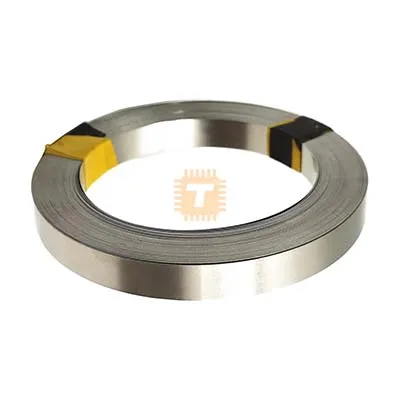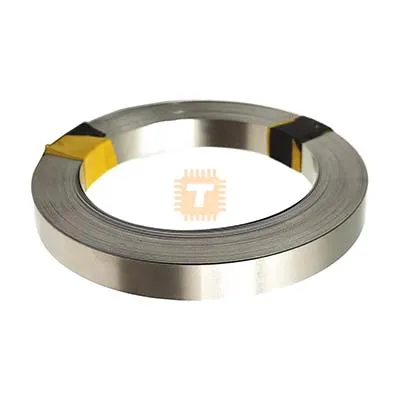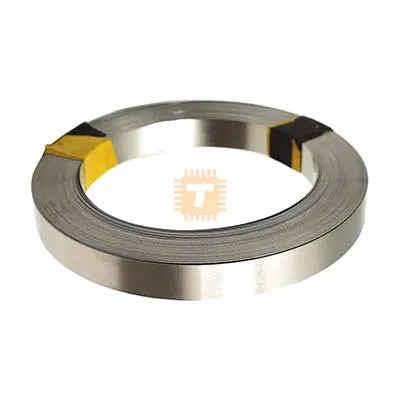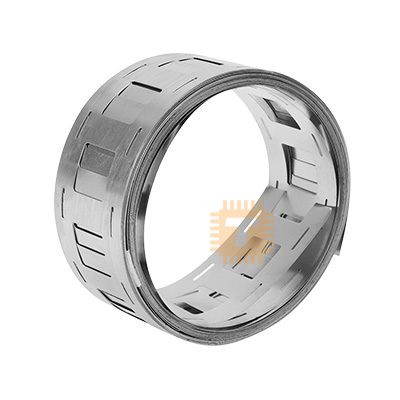
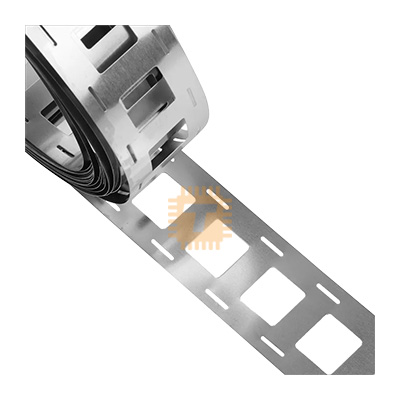
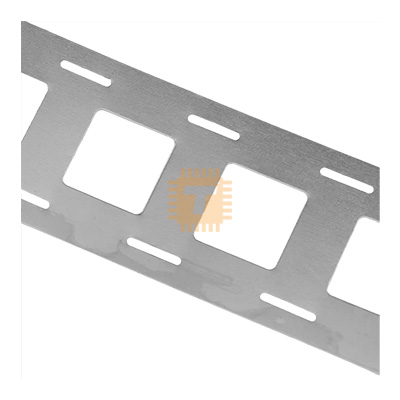
Nickel Sheet Plate 0.15mmx26mm for 18650 battery 5m Price in Sri Lanka

Tronic.lkListing · checkedChecked 10 Nov 2026
Rs1,200In stock
Go to Tronic.lk ↗https://tronic.lk/product/nickel-sheet-plate-0-15mmx26mm-for-18650-battery-5mCall0777854444WhatsApp+94764485607
Search for it on
Price history
Price at Tronic.lk at the end of each day · last 90 daysNo price history yetWe started tracking this listing recently. The chart and change tables appear after the first price or stock change.
Price insights
- Today at Tronic.lk
- Rs1,200
Description
The Nickel Sheet Plate 0.15mm × 26mm for 18650 Battery (5m Roll) is a specialized, wide-format conductive strip engineered for assembling multi-cell lithium-ion battery packs, high-current power banks, electric vehicle (EV) battery arrays, and industrial energy storage systems. Designed specifically to span dual-row 18650 cell configurations (with or without standard modular spacer brackets), the 26 mm width enables parallel-series interconnects in a single continuous run. The standard 0.15 mm thickness offers an optimal balance between low electrical resistance, elevated ampacity, and the spot-weld penetration energy required by portable capacitor-discharge and transistor spot welders.
Specifications
- Material Type: High-Purity Nickel-Plated Low-Carbon Steel (SPCC) or Pure Nickel (Ni200/Ni201 depending on manufacturing batch grade)
- Primary Application: 18650 / 21700 Cylindrical Lithium-Ion & LiFePO4 Battery Pack Interconnection
- Strip Thickness: 0.15 mm (±0.01 mm tolerance)
- Strip Width: 26.0 mm (±0.2 mm tolerance)
- Total Length: 5.0 Meters continuous spool
- Form Factor: Continuous flat un-slit roll (can be trimmed or slot-punched to custom layout geometries)
- Electrical Conductivity & Current Capacity:
- Continuous Current Capacity: ~15 A to 20 A (Depending on weld point layout and ambient heat dissipation)
- Peak / Burst Current Capacity: Up to 30 A (Pulse duration < 5>
- Resistivity: Low internal resistance to minimize I^2R resistive thermal dissipation during high-rate discharge
- Weldability: Compatible with capacitive discharge, transformer-based, and lithium battery-driven pulse spot welders
- Solderability: High wetting compatibility with 60/40, 63/37, and lead-free SAC305 rosin-core solders (direct spot-weld preferred over direct cell soldering)
- Corrosion Resistance: Superior oxidation and rust protection in ambient, humid workshop environments
- Tensile Strength: ≥ 350 to 500 N/mm² (Ductile, withstands 90° bends without hairline fracturing)
- Gross Weight (5m Roll): Approx. 170 g to 185 g
Features
- Dual-Row 18650 Layout Alignment: The 26 mm width is calculated to bridge adjacent parallel rows of 18650 cells housed in standard interlocking plastic spacers (which have a nominal center-to-center pitch of 20.2 mm), enabling unified busbar routing without needing multiple overlapping narrow strips.
- Optimized 0.15 mm Spot-Welding Gauge: Provides structural durability and current-carrying volume while remaining within the pulse-energy limits of standard hobbyist and benchtop spot welders (such as kWeld, Sequre, or portable battery-driven welders) without blowing through the negative cell casing.
- Low Electrical Resistance: Minimizes voltage sag across parallel cell blocks under heavy load, ensuring uniform current distribution and preventing hot spots across high-drain power tool or e-bike packs.
- High Mechanical Ductility: Resists fatigue and micro-cracking from road vibration, mechanical shock, and thermal expansion cycles encountered in electric mobility applications.
- Clean Surface Finish: Mirror-finish, degreased surface ensures low contact resistance at the copper electrode interface, reducing electrode tip contamination, pitting, and sparking during welding.
Common Applications
- Electric Bike & Scooter Battery Packs: Fabricating 36V, 48V, 52V, and 72V multi-parallel lithium packs (e.g., 10S4P, 13S5P, 14S6P configurations).
- Solar Energy Storage & Inverter Power Walls: Building 12V, 24V, and 48V auxiliary backup power banks and off-grid storage systems.
- High-Drain Cordless Power Tools: Re-celling and rebuilding custom battery enclosures for drills, angle grinders, and lawnmowers.
- Robotics & Autonomous Vehicle Power Stages: Custom high-discharge Li-ion battery arrays for delivery robots, combat robots, and heavy UAV ground stations.
- High-Capacity Portable Power Banks: Assembling multi-cell 1S or 2S battery layouts for field-charging equipment and camping power stations.
Usage Tips & Safety Guidelines
- Spot Welder Settings & Pulse Tuning:
- A 0.15 mm strip requires adequate welding energy (typically 30 J to 50 J on capacitive welders, or a dual-pulse setting of ~5 ms pre-pulse + 15–25 ms main pulse on transformer/MOSFET units).
- Always test your pulse duration and electrode pressure on a depleted dummy cell or scrap piece before welding live cells. A successful weld should pull metal slugs from the strip when peeled with pliers rather than popping off cleanly.
- Preventing Accidental Short Circuits (CRITICAL):
- On an 18650 cell, the positive terminal is separated from the negative outer casing by only a fraction of a millimeter around the top shoulder.
- Always install self-adhesive barley paper (fish paper) terminal insulating rings over the positive poles of every cell before laying down wide 26 mm nickel sheet. Without insulation rings, the wide nickel strip can easily cut through the plastic shrink sleeve and short directly against the negative can shoulder, resulting in immediate thermal runaway.
- Slitting / Center-Notching for Better Welds:
- Because this sheet is a solid 26 mm strip without pre-punched slits, current from adjacent spot-welder probe tips can travel directly across the strip surface rather than penetrating down into the cell cap.
- For optimal weld nugget formation, use metal snips or a punch tool to cut a small 1 mm relief slit between each pair of weld spots. This forces the welding pulse current to flow down through the cell terminal interface.
- Avoiding Direct Soldering:
- Never solder directly onto the caps of 18650 lithium cells using a standard soldering iron. The sustained heat degrades internal electrolyte seals, damages the safety vent (CID), and creates a severe fire hazard.
- Spot weld this nickel plate first. If wire connections are needed (e.g., BMS balance leads or main discharge cables), solder the heavy wires to the nickel strip tab away from the cell body before or after welding.
Questions
About this listing at Tronic.lkWhat is the price of Nickel Sheet Plate 0.15mmx26mm for 18650 battery 5m at Tronic.lk in Sri Lanka?
Rs 1,200, checked 10 Nov 2026.
Is Nickel Sheet Plate 0.15mmx26mm for 18650 battery 5m in stock at Tronic.lk in Sri Lanka?
Yes, it was in stock at Tronic.lk at the last check.
Where can I buy Nickel Sheet Plate 0.15mmx26mm for 18650 battery 5m in Sri Lanka?
Tronic.lk sells it on tronic.lk. You can also call or WhatsApp the shop during opening hours.
Rs1,200at Tronic.lk · In stock
Go to Tronic.lk ↗https://tronic.lk/product/nickel-sheet-plate-0-15mmx26mm-for-18650-battery-5m