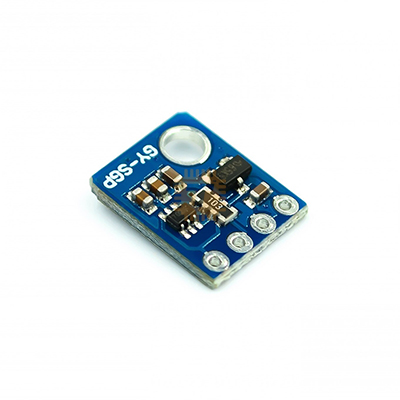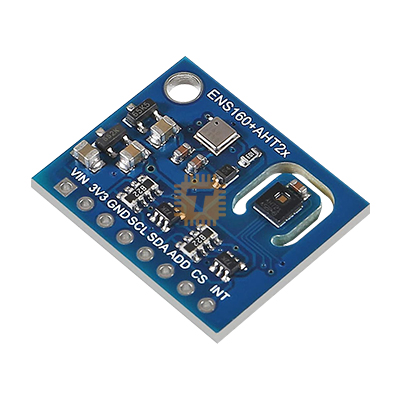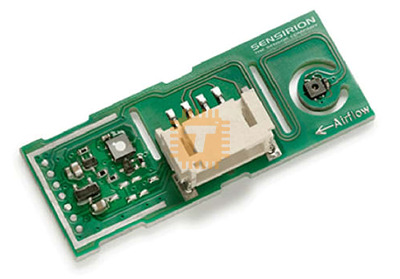
SVM30-J Air Quality Sensor TVOC
Price in Sri Lanka
Gas SensorsMeasurement ModulesSHARP
Tronic.lk

Rs 14,250
Out of stock
Updated 01 Nov 2026
Opening hours
Closed now
- Monday09:00 - 19:00
- Tuesday09:00 - 19:00
- Wednesday09:00 - 19:00
- Thursday09:00 - 19:00
- Friday09:00 - 19:00
- Saturday09:00 - 19:00
- SundayToday09:00 - 19:00
Search for it on
Description
The SVM30-J is an all-in-one environmental sensing combo module engineered by Sensirion to streamline air quality monitoring product development. It integrates two proven sensors onto a single PCB: the SGP30 multi-pixel gas sensor for volatile organic compounds and carbon dioxide equivalents, and the SHTC1 relative humidity and temperature sensor. Featuring fully integrated humidity compensation and automatic baseline management, the SVM30-J delivers pre-calibrated air quality metrics over a simple I2C interface.
Specifications
- Integrated Chips: Sensirion SGP30 (Gas Sensor) & Sensirion SHTC1 (Humidity & Temperature Sensor)
- Supply Voltage: 5V DC
- Measured Parameters:
- TVOC (Total Volatile Organic Compounds): 0 to 60,000 ppb
- CO2eq (CO2-Equivalent): 400 to 60,000 ppm
- Relative Humidity (RH): 0% to 100% RH
- Temperature (T): -20°C to +85°C
- Interface: Digital I2C Interface
- Features: Onboard automatic baseline compensation and real-time gas signal humidity compensation
- Calibration: Fully factory-tested and pre-calibrated
- Long-Term Stability: High resistance to siloxanes and environmental sensor drift
Interface and Pinout Guide
- VCC: 5V Power Supply Input
- GND: Common Power and Signal Ground Reference
- SCL: I2C Serial Clock Line (Connects to MCU SCL pin)
- SDA: I2C Serial Data Line (Connects to MCU SDA pin)
Key Features
- Combo Sensor Integration: Combines gas, relative humidity, and ambient temperature sensing into a single compact board, drastically cutting hardware footprint and circuit layout time.
- On-Board Signal Processing: Uses real-time relative humidity data directly from the onboard SHTC1 sensor to compensate the SGP30 MOX gas readings, ensuring high TVOC and eCO2 accuracy in fluctuating environments.
- Automatic Baseline Compensation: Features Sensirion’s advanced internal baseline algorithm to maintain long-term signal stability without requiring frequent manual recalibrations.
- Plug-and-Play I2C Communication: Outputs fully processed physical metrics directly over I2C, eliminating the need for complex analog sampling equations or custom temperature compensation math on the host processor.
Common Applications
- Smart Air Purifiers & HVAC Controls: Driving automated fan speeds and air filtration units based on real-time room VOC and humidity metrics.
- Indoor Air Quality (IAQ) Monitors: Building desktop environmental monitoring terminals for classrooms, healthcare centres, homes, and offices.
- Smart Home & IoT Environmental Nodes: Integrating comprehensive indoor atmospheric data into smart home automation hubs and cloud logging systems.
- Ventilation Systems: Monitoring CO2-equivalent levels in conference rooms to trigger fresh air intake dampers.
Usage Tips
- Initial Warm-Up Period: Upon powering on the module, the gas sensor requires a brief warm-up phase (typically 15 seconds) before returning valid TVOC and eCO2 readings.
- Baseline Memory Storage: To maintain high accuracy across power cycles, read the baseline calibration parameters from the module every hour and store them in non-volatile memory (EEPROM/Flash), then restore them during the boot sequence.
- Airflow Placement: Mount the module in an enclosure with adequate passive ventilation so that ambient air flows freely over the sensing elements. Avoid placing it directly next to high-heat components (such as linear regulators or power transistors) to prevent false temperature and humidity offsets.
Frequently asked questions
What is the price of SVM30-J Air Quality Sensor TVOC in Sri Lanka?▾
The current price of SVM30-J Air Quality Sensor TVOC in Sri Lanka is Rs 14,250 at Tronic.lk.
Is SVM30-J Air Quality Sensor TVOC available in Sri Lanka?▾
SVM30-J Air Quality Sensor TVOC is currently out of stock at Tronic.lk in Sri Lanka.
Where can I buy SVM30-J Air Quality Sensor TVOC in Sri Lanka?▾
You can buy SVM30-J Air Quality Sensor TVOC in Sri Lanka at Tronic.lk. Visit 37left.lk to compare prices across multiple shops and find the best deal.
Loading...