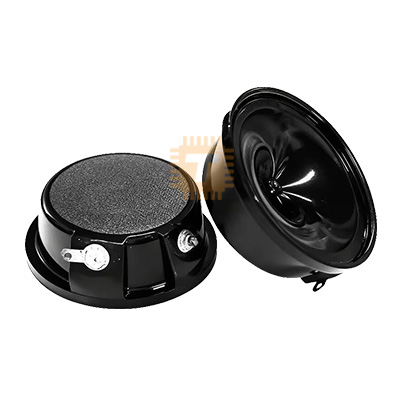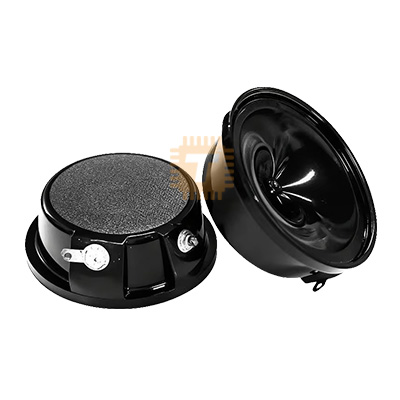
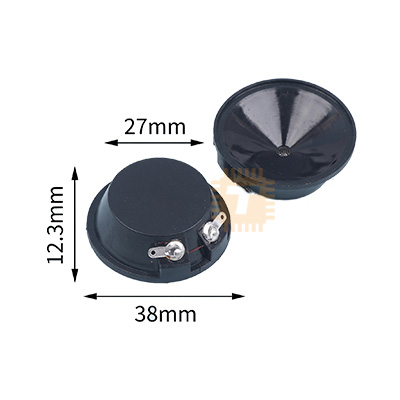
Waterproof Ultrasonic Speaker 20KHz 3840 Audio Mouse Repellent Bird Repellent Buzzer
Price in Sri Lanka
SpeakersAmplifiers Radios and Speakers
Tronic.lk

Rs 400
In stock
Updated 01 Nov 2026
Opening hours
Closed now
- Monday09:00 - 19:00
- Tuesday09:00 - 19:00
- Wednesday09:00 - 19:00
- Thursday09:00 - 19:00
- Friday09:00 - 19:00
- Saturday09:00 - 19:00
- SundayToday09:00 - 19:00
Search for it on
Description
The Waterproof Ultrasonic Speaker 20KHz 3840 Audio Mouse Repellent Bird Repellent Buzzer is a high-output, weather-resistant piezoelectric ultrasonic transducer engineered specifically for electronic pest deterrence, animal training, and acoustic repelling systems. Operating around a center resonant frequency of 20 kHz (with broadband output extending across 15 kHz to 40 kHz), it generates high sound pressure levels (SPL) that cause auditory discomfort to rodents, birds, bats, and insects without creating audible disturbance to most adult humans. Housed in a sealed, waterproof, and corrosion-resistant thermoplastic casing with an integrated aluminum vibrating diaphragm, the 3840 form-factor transducer is built for long-term outdoor deployment in agricultural fields, rooftops, industrial warehouses, and solar installations.
Specifications
- Model / Series: 3840 Piezoelectric Ultrasonic Transducer / Speaker
- Primary Operating Function: External Ultrasonic Emitter / Acoustic Pest Repeller
- Center Resonant Frequency: 20 kHz (±5 kHz nominal resonance)
- Effective Ultrasonic Frequency Range: 15 kHz to 40 kHz (Broadband coverage for variable frequency sweeps)
- Sound Pressure Level (SPL): ≥ 85 dB to 105 dB at 10 cm / 1 m (at 10V–15V AC square wave drive)
- Rated Drive Voltage: 5.0 Vrms to 12.0 Vrms
- Operating Voltage Range: 1.0 Vp-p to 30.0 Vp-p Max.
- Transducer Element: High-Efficiency Piezoelectric Ceramic Disc Element
- Static Capacitance: Approx. 18,000 pF to 25,000 pF (at 1 kHz / 1V)
- Impedance: Approx. 200 Ω to 800 Ω (at resonant frequency)
- Ingress Protection Rating: Weatherproof / IP65 Splashproof & Dustproof Construction
- Operating Temperature Envelope: -20°C to +70°C
- Terminal Connections: Solder Lugs / 2-Pin Flying Lead Wires (Non-polarized capacitive load)
- Housing Material: Impact-Resistant ABS / PBT Engineering Polymer with Aluminum Alloy Radiating Cone
- Mounting Dimensions:
- Outer Diameter: Approx. 38.0 mm (Standard 3840 series frame)
- Body Height / Depth: Approx. 12.0 mm to 15.0 mm
- Net Weight: Approx. 8.5 g to 12.0 g
Features
- High-Decibel Ultrasonic Emission: Delivers powerful acoustic sound pressure in the 18 kHz to 25 kHz spectrum, creating an intolerable acoustic barrier for rodents and pests while remaining silent to human ears.
- Waterproof & Weather-Sealed Design: Sealed face construction protects internal piezoelectric elements from rainwater, morning dew, high humidity, and airborne dust in outdoor environments.
- Wide Dispersion Angle: Conical acoustic horn profile radiates ultrasonic pressure across a wide angle (~60° to 90° conical beam), ensuring broad coverage across yards, attics, and warehouse rafters.
- Low Power Consumption: Because piezoelectric elements function primarily as capacitive reactive loads, current draw is negligible compared to electromagnetic voice-coil speakers, making it ideal for solar- and battery-powered nodes.
- Variable Frequency Sweep Compatible: Handles dynamic frequency modulation (chirping, sweeping, or random bursts between 18 kHz and 30 kHz) to prevent pests from habituating to a static acoustic frequency.
Common Applications
- Rodent & Mouse Deterrent Systems: Ultrasonic repelling boxes placed in attics, ceiling spaces, vehicle engine bays, and server room subfloors to deter mice and rats.
- Agricultural & Rooftop Bird Repellers: Mounted under warehouse eaves, solar panel arrays, fruit orchards, and balconies to discourage pigeons, crows, and swallows from roosting.
- Ultrasonic Dog & Cat Deterrents: Yard perimeter guards and barking deterrent trainers triggered automatically by motion sensors or audio monitors.
- Industrial Grain & Food Storage Protection: Protecting grain silos, grocery warehouses, and bakery storage from rat and insect infestation without chemical poisons.
- Bat & Pest Repelling Devices: Outdoor solar-powered repelling stakes deployed in gardens, fish farms, and livestock sheds.
Usage Tips
- Driving Circuit Requirements (CRITICAL):
- Do NOT connect this transducer directly to a pure DC power supply. A piezoelectric speaker is a capacitive load; applying steady DC voltage will cause zero sound output and draw no meaningful current.
- Drive the speaker with an AC square wave or push-pull PWM signal (18 kHz to 25 kHz) generated by a microcontroller (Arduino `tone()` or ESP32 LEDC PWM), a 555 timer IC, or an H-bridge driver.
- For maximum sound pressure output (loudest emission), use an H-bridge (e.g., L298N, TC4427, or discrete MOSFETs) running on 12V to 24V to drive the transducer with a true 24V–48V peak-to-peak swing.
- Frequency Sweeping to Prevent Habituation:
- Rodents and birds quickly adapt to continuous, single-frequency tones.
- Program your microcontroller firmware to continuously sweep frequencies (e.g., from 19 kHz to 26 kHz over 3 seconds) or generate randomized burst pulses to maintain repellent effectiveness long-term.
- Line-of-Sight Placement:
- High-frequency ultrasonic waves (20 kHz+) act like light rays: they travel in straight lines and do not penetrate solid walls, ceilings, doors, or dense foliage.
- Soft materials (carpets, curtains, insulation) absorb ultrasound, reducing range. Aim the face of the transducer directly toward open spaces, hard reflective surfaces (concrete, tiles), or entry paths where pests congregate.
- Outdoor Mounting Orientation: While the speaker face is water-resistant, mount the unit facing slightly downward (a 10° to 15° downward tilt) under a roof overhang or protective bezel so standing rainwater cannot pool inside the diaphragm cup.
- Domestic Pet Considerations: While humans cannot hear 20 kHz to 25 kHz, domestic dogs, cats, and pet rodents (hamsters, guinea pigs) possess higher frequency hearing ranges. Avoid using high-power ultrasonic deterrents in living areas where domestic pets are kept indoors.
Frequently asked questions
What is the price of Waterproof Ultrasonic Speaker 20KHz 3840 Audio Mouse Repellent Bird Repellent Buzzer in Sri Lanka?▾
The current price of Waterproof Ultrasonic Speaker 20KHz 3840 Audio Mouse Repellent Bird Repellent Buzzer in Sri Lanka is Rs 400 at Tronic.lk.
Is Waterproof Ultrasonic Speaker 20KHz 3840 Audio Mouse Repellent Bird Repellent Buzzer available in Sri Lanka?▾
Yes, Waterproof Ultrasonic Speaker 20KHz 3840 Audio Mouse Repellent Bird Repellent Buzzer is currently in stock at Tronic.lk in Sri Lanka.
Where can I buy Waterproof Ultrasonic Speaker 20KHz 3840 Audio Mouse Repellent Bird Repellent Buzzer in Sri Lanka?▾
You can buy Waterproof Ultrasonic Speaker 20KHz 3840 Audio Mouse Repellent Bird Repellent Buzzer in Sri Lanka at Tronic.lk. Visit 37left.lk to compare prices across multiple shops and find the best deal.
Loading...