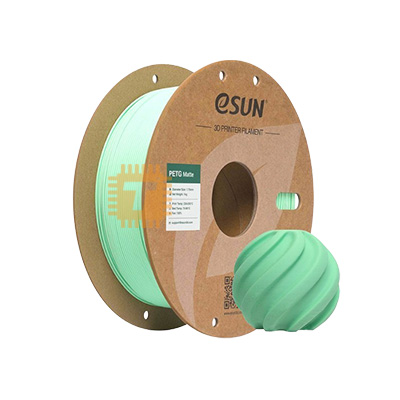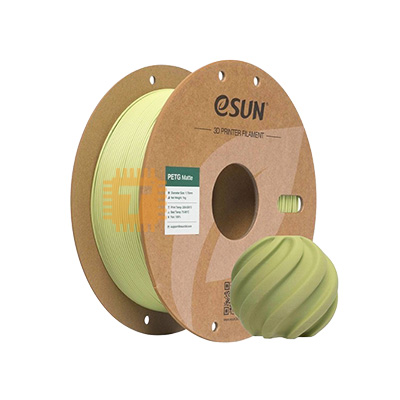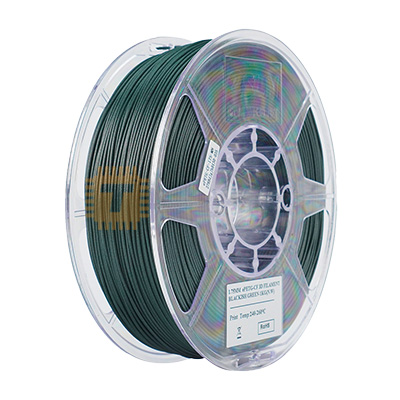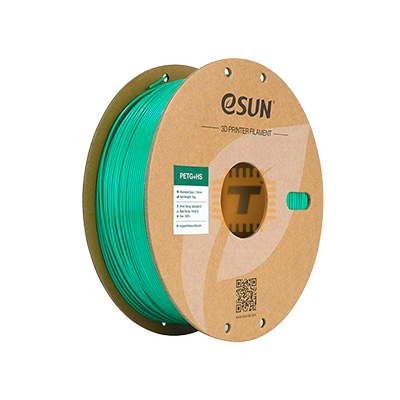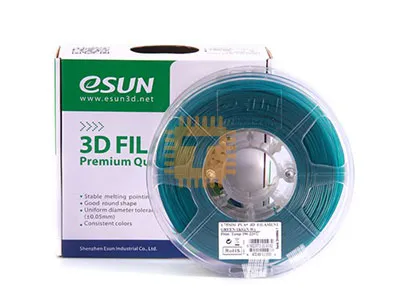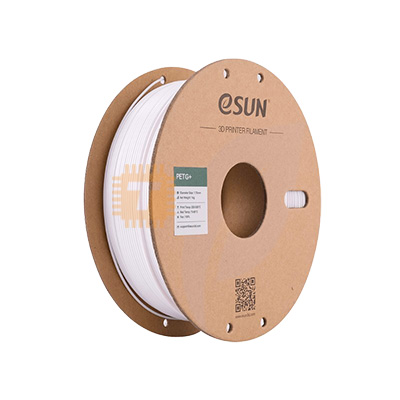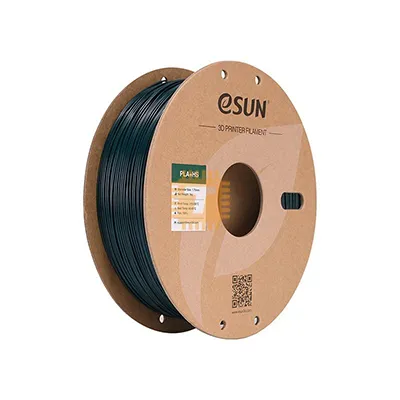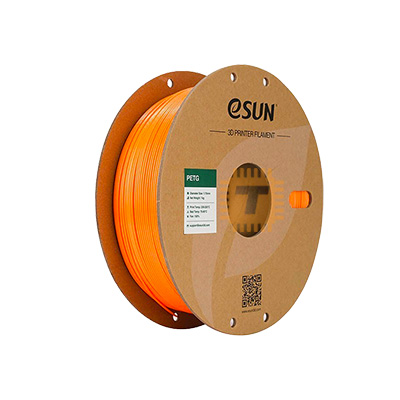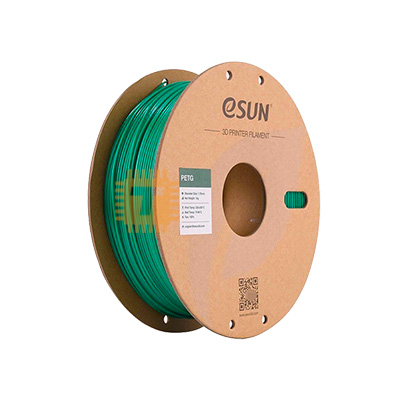
eSUN PETG Green 1.75mm 1Kg 3D Printer Filament Price in Sri Lanka

Tronic.lkListing · checkedChecked 10 Nov 2026
Rs4,500In stock
Go to Tronic.lk ↗https://tronic.lk/product/esun-petg-green-1-75mm-1kg-3d-printer-filamentCall0777854444WhatsApp+94764485607
Search for it on
Price history
Price at Tronic.lk at the end of each day · last 90 daysNo price history yetWe started tracking this listing recently. The chart and change tables appear after the first price or stock change.
Price insights
- Today at Tronic.lk
- Rs4,500
Description
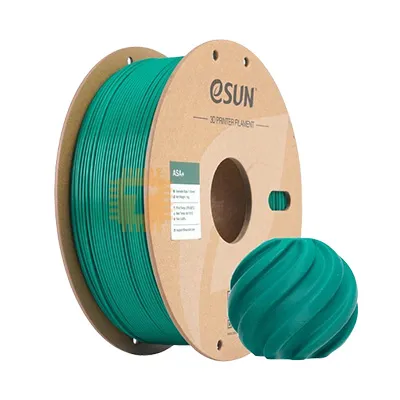
The eSUN PETG Green 1.75mm 1Kg 3D Printer Filament is an engineering-grade thermoplastic polyester filament engineered for durable functional prototypes, mechanical brackets, outdoor enclosures, and high-impact structural components. Synthesized by modifying polyethylene terephthalate with glycol (PETG), it eliminates the inherent brittleness of standard PET while combining the dimensional stability and ease of printing associated with PLA with the mechanical toughness, thermal stability, and chemical resistance of ABS. Supplied on an environmentally friendly recyclable cardboard spool, this 1.75mm filament provides a tight diameter tolerance (±0.03mm), high interlayer bonding strength, low shrinkage, and a vibrant, glossy emerald green finish with subtle translucency.
Specifications
- Material Formulation: Polyethylene Terephthalate Glycol-Modified (PETG)
- Filament Color : Green
- Filament Diameter: 1.75 mm (±0.03 mm high-precision laser-monitored tolerance)
- Net Material Weight: 1.0 kg (1000 g / ~2.2 lbs excluding spool tare mass)
- Density: Approx. 1.27 g/cm³
- Thermal Characteristics:
- Extrusion / Nozzle Printing Temperature: 230°C to 250°C (Recommended baseline: 240°C)
- Heated Bed Temperature: 70°C to 85°C (Recommended baseline: 75°C to 80°C)
- Heat Deflection Temperature (HDT): Approx. 68°C to 72°C (at 0.45 MPa)
- Glass Transition Temperature (Tg): ~80°C
- Mechanical Performance:
- Tensile Strength: ≥ 45 to 50 MPa
- Elongation at Break: ≥ 120% to 150% (High ductility, resists brittle fracturing)
- Flexural Modulus: ~2100 MPa
- Izod Notched Impact Strength: Approx. 7 to 8 kJ/m²
- Printing Speed Compatibility: 40 mm/s to 100 mm/s (Standard kinematics) / Up to 150–250 mm/s on high-flow CoreXY systems with tuned pressure advance
- Cooling Fan Speed: 30% to 60% (Lower speeds promote maximum inter-layer fusion; higher speeds improve bridge spans and overhangs)
- Spool Construction: Recyclable Eco-Friendly Cardboard Spool with filament weight sight-gauges
- Spool Dimensions: Approx. 200 mm Outer Diameter × 65 mm Width (Arbor hub bore: ~53 mm)
- Packaging: Vacuum-sealed bag with desiccant pouch inside a retail corrugated box
- Gross Package Weight: Approx. 1.25 kg to 1.30 kg
Features
- Superior Layer-to-Layer Adhesion: Bonds aggressively across successive layer lines, producing dense, isotropic, watertight parts that resist structural shear and delamination.
- High Ductility & Impact Resistance: Absorbs mechanical shocks and cyclic loads by yielding elastically rather than snapping or shattering like rigid PLA.
- Chemical & Moisture Resilience: Inert to dilute acids, alkalis, greases, oils, and continuous moisture immersion, making it suitable for automotive, marine, and plumbing accessories.
- UV & Weathering Endurance: Resists ultraviolet light degradation and thermal embrittlement, retaining structural integrity and rich green color saturation in direct outdoor sunlight.
- Low Warping & Shrinkage: Displays a low thermal expansion coefficient, enabling reliable printing of large flat footprints without the severe corner curling typical of ABS or ASA.
- Neat Layer Winding: Spooled with automated tension-controlled winding to eliminate crossed turns and snag-induced mid-print extrusion failures.
Common Applications
- Outdoor & Agricultural Enclosures: Weatherproof sensor boxes, irrigation fittings, drone arms, and garden telemetry stakes exposed to sun and rain.
- Functional Mechanical Mounts: Motor brackets, belt tensioners, robotics chassis plates, battery holders, and heavy-duty structural joints.
- Automotive Interior & Engine Bay Accessories: Cable routing clips, air duct adapters, and custom gauge pods that withstand cabin heat up to ~70°C without softening.
- Fluid Handling & Reservoirs: Custom pump housings, hydroponic fittings, drainage manifolds, and aquarium filter adapters.
- Custom Electronics Cases: Protective enclosures for development boards (Arduino, ESP32, Raspberry Pi) and industrial test jigs.
Usage Tips
- Build Plate Adhesion & Surface Protection (CRITICAL):
- Do NOT print PETG directly onto smooth PEI or bare clean glass without an interface barrier. PETG can bond chemically to smooth PEI or glass and tear the coating or pull glass chips off the surface upon removal.
- Apply a thin release layer of PVP glue stick, Magigoo, or hairspray, or print directly on a Textured Powder-Coated PEI spring steel sheet.
- Allow the heated bed to cool down completely below 35°C before removing the part; thermal contraction will cause the print to pop off easily on its own.
- Retraction & Stringing Prevention:
- Due to PETG's high melt viscosity, dial in retraction to prevent fine cobwebs and oozing.
- For direct-drive setups, use 0.8 mm to 1.5 mm retraction at 35–45 mm/s; for Bowden extruders, use 4.0 mm to 6.0 mm at 40–50 mm/s.
- Enable slicer features like "Wipe While Retracting" and "Avoid Crossing Perimeters" (Combing) to wipe the nozzle tip over internal infill before traveling over outer shells.
- Z-Offset Calibration:
- Unlike PLA, which benefits from being firmly squished into the build plate, PETG prefers to be laid down gently without excessive nozzle pressure.
- Increase your Z-offset by roughly +0.02 mm to +0.04 mm relative to a standard PLA calibration to keep molten plastic from sticking to the nozzle nozzle and causing burnt blobs.
- Drying & Humidity Management:
- PETG is hygroscopic and absorbs ambient moisture over time, resulting in popping sounds, foamy outer walls, and weak layer bonding.
- If the spool has been exposed to ambient humidity, dry it in an active filament dryer or convection oven at 60°C to 65°C for 6 to 8 hours before printing, and feed it from a sealed dry box for long multi-day jobs.
- Fan Speed Optimization: Run part cooling at 20% to 50% for general structural parts to maximize interlayer strength. Increase cooling to 60%–80% only during short layer times, bridging spans, and steep overhang angles (>55°).
Questions
About this listing at Tronic.lkWhat is the price of eSUN PETG Green 1.75mm 1Kg 3D Printer Filament at Tronic.lk in Sri Lanka?
Rs 4,500, checked 10 Nov 2026.
Is eSUN PETG Green 1.75mm 1Kg 3D Printer Filament in stock at Tronic.lk in Sri Lanka?
Yes, it was in stock at Tronic.lk at the last check.
Where can I buy eSUN PETG Green 1.75mm 1Kg 3D Printer Filament in Sri Lanka?
Tronic.lk sells it on tronic.lk. You can also call or WhatsApp the shop during opening hours.
Rs4,500at Tronic.lk · In stock
Go to Tronic.lk ↗https://tronic.lk/product/esun-petg-green-1-75mm-1kg-3d-printer-filament