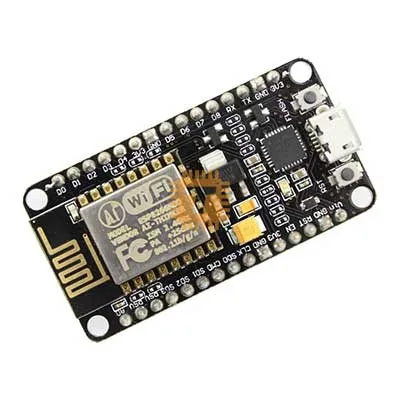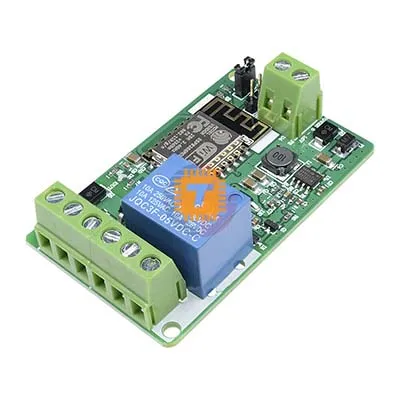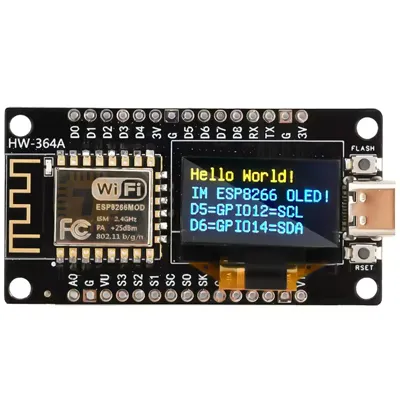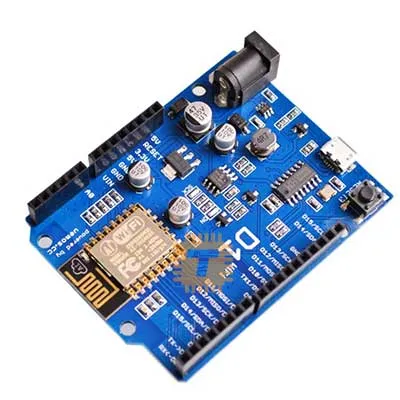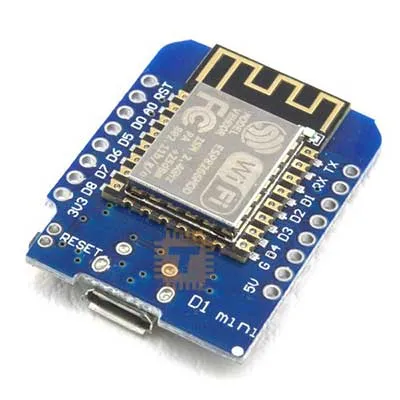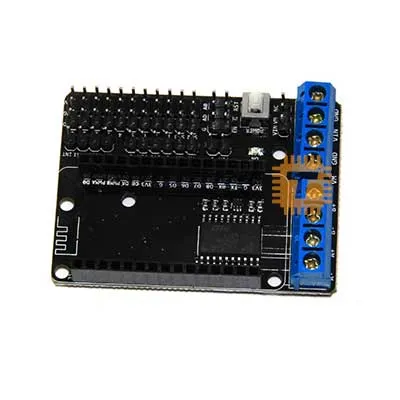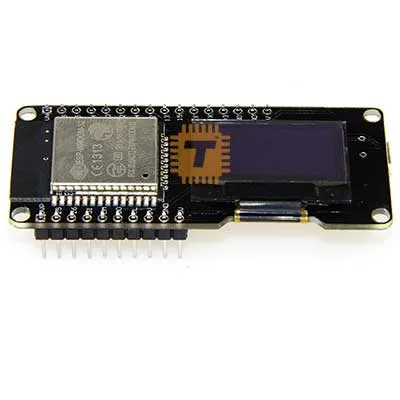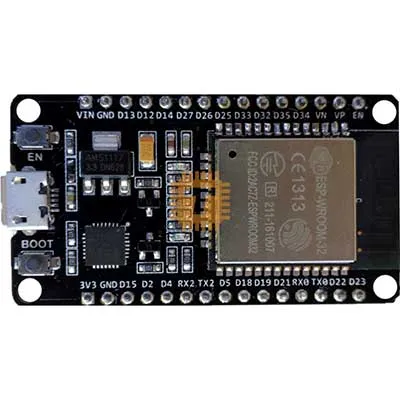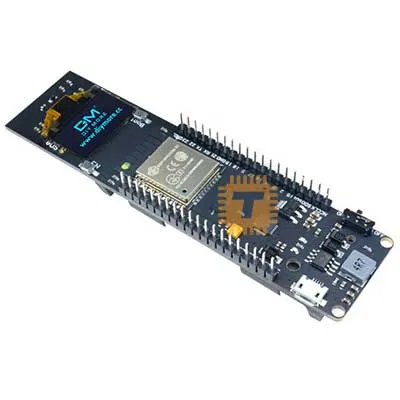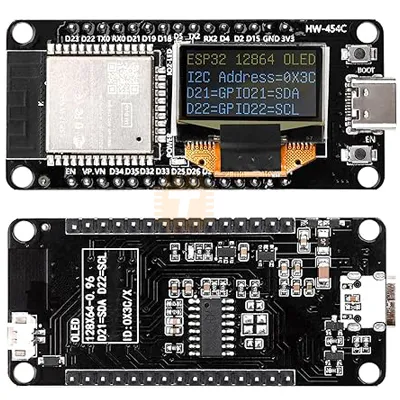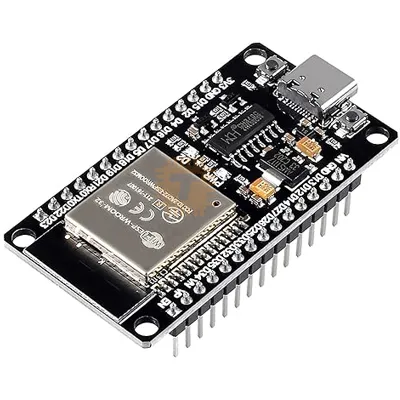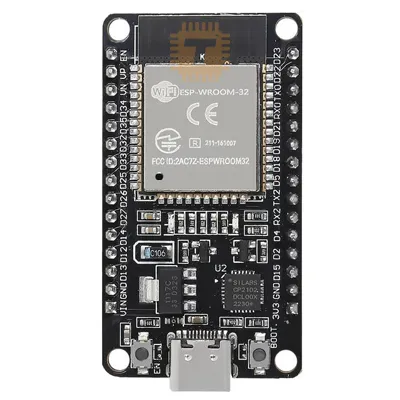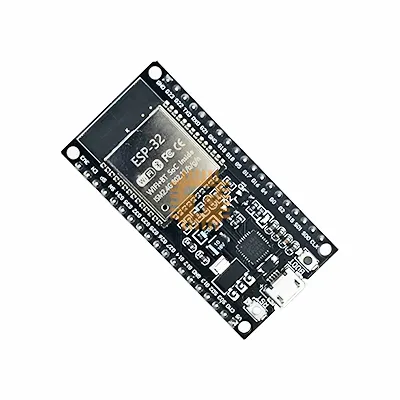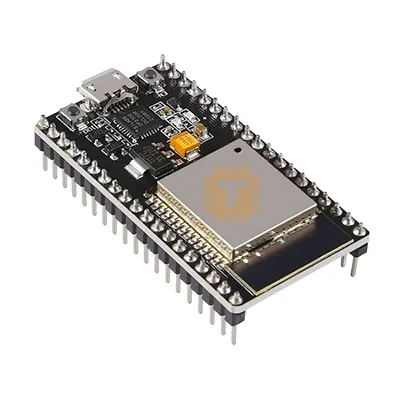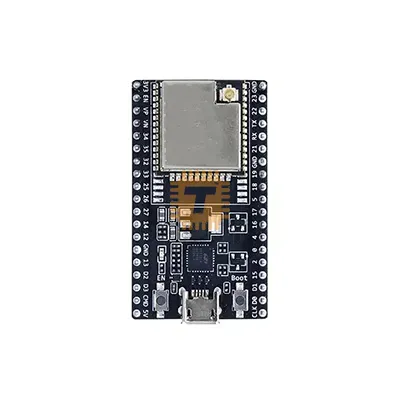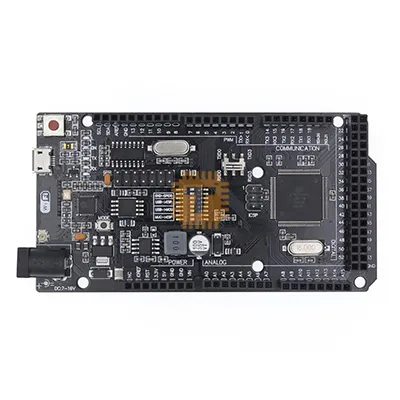
NodeMCU ESP8266 ESP-12E Dev Board MicroUSB CH340 30-pin Price in Sri Lanka
At 1 shopRs770In stock at this shop
Compare prices
1 shop · in stock first, cheapest first
Rs770
Search for it on
Price history
Each shop's price at the end of each day, over the last 14 days.
Tronic.lk · WiFi Bluetooth IoT
In stock
Tap or hover over the chart to see every shop's price that day.
Description
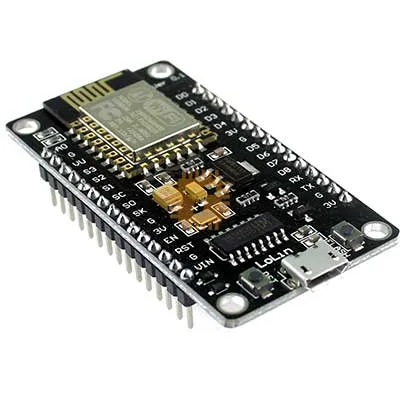
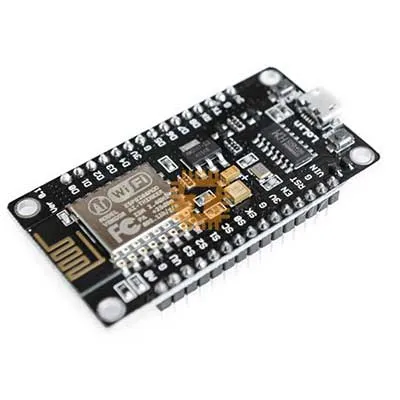
ESP8266 NodeMcu is a popular and widely used development board based on the ESP-12E WiFi Module that combines elements of easy programming with Arduino IDE (C\C++) and WiFi capability. Through the build-in programmer and CH340G USB-to-Serial chip, flashing the ESP8266 and serial output on a PC, development and prototyping projects are done with ease. Just like Arduino boards, the ESP8266 NodeMcu has GPIO pins, voltage regulator, ADC, Micro-USB port (for flashing and serial output) – all on one board. On top of that the ESP8266 NodeMcu has a full WiFi that takes care of the WiFi communication to a server or client.
The ESP8266 is a system on a chip (SoC), manufactured by the Chinese company Espressif. It consists of a Tensilica L106 32-bit microcontroller unit (MCU) and a Wi-Fi transceiver. It has 11 GPIO (general-purpose input/output) pins and an analog input as well. This means that you can program it like any other normal Arduino or other microcontroller. And on top of that, you get Wi-Fi communication, so you can use it to connect to your Wi-Fi network, connect to the Internet, host a web server with real web pages, let your smartphone connect to it, etc. The possibilities are endless! It’s no wonder that this chip has become the most popular IOT device available.
It contains a built-in 32-bit low-power CPU, ROM, and RAM. It is a complete and self-contained Wi-Fi network solution that can carry software applications as a stand-alone device or be connected with a microcontroller (MCU). The module has built-in AT Command firmware and can be used with any MCU via the COM port. The ESP8266 can be flashed and programmed using the Arduino IDE. Due to its large open-source developer community, a large number of libraries for this popular microcontroller are available.
Processor:
The ESP8266EX integrates a Tensilica L106 32-bit RISC processor, which achieves extra-low power consumption and reaches a maximum clock speed of 160MHz. The real-time operating system (RTOS) and Wi-Fi stack allow 80% of the processing power to be available for user application programming and development.
Features:
- 32 KB instruction RAM
- 80 KB user data RAM
- 16 KB ETS system data RAM
- External QSPI flash: up to 16 MB is supported (512 KB to 4 MB typically included)
- IEEE 802.11 b/g/n Wi-Fi
- Integrated TR switch, balun, LNA, power amplifier and matching network
- WEP or WPA/WPA2 authentication, or open networks
- 16 GPIO pins
- SPI
- I²C (software implementation)
- I²S interfaces with DMA (sharing pins with GPIO)
- UART on dedicated pins, plus a transmit-only UART can be enabled on GPIO2
- 10-bit ADC (successive approximation ADC)
All ESP8266 variants have an ESP8266EX core processor and a Tensilica L106 32-bit microcontroller unit. This is a low-cost, high-performance, low-power, easy-to-program, wireless SoC (system-on-chip). It provides capabilities for 2.4 GHz Wi-Fi (802.11 b/g/n, supporting WPA/WPA2), general-purpose input/output (13 GPIO), Inter-Integrated Circuit (I2C), analog-to-digital conversion (10-bit ADC), Serial Peripheral Interface (SPI), I2S interfaces with DMA (sharing pins with GPIO), UART (on dedicated pins, plus a transmit-only UART can be enabled on GPIO2), and pulse-width modulation (PWM) and
It has a built-in programmer and a voltage regulator that allow flashing and powering the device via micro-USB. The system operates at 3.3V.
Specifications:
- Tensilica L106 32-bit micro controller unit at 80 MHz (or overclocked to 160 MHz)
- 32 kB instruction RAM
- 80 kB user data RAM
- 16 kB ETS system data RAM
- Flash Memory 4Mb
- USB – micro USB port for power, programming and debugging
- 13 GPIO pins
- 802.11 b/g/n, supporting WPA/WPA2
- STA / AP modes support
- TCP / IP protocol stack, One socket
- TCP / UDP Server and Client
- Serial port baud rate configuration: 1200/2400/4800/9600/19200/38400/57600/74800/115200 bps
- Pin-compatible with Arduino UNO, Mega
- KEY button: modes configuration
- 32-bit hardware timer
- WiFi operation current: continuous transmission operation: ≈70mA (200mA MAX), deep sleep mode: <3mA>
- Serial WiFi transmission rate: 110-460800bps
- Temperature: -40℃ ~ + 125 ℃
- Humidity: 10%-90% non-condensing
- Weight: about 20g (0.7oz)
- Pulse-Width Modulation (PWM)
- Interrupt capability
- 3.3V operating voltage, internal voltage regulator allows 5V on power input
- maximum current through GPIO pins: 12mA (source), 20mA (drain)
- available firmware for Arduino IDE
- WebSocket libraries available
Questions
About NodeMCU ESP8266 ESP-12E Dev Board MicroUSB CH340 30-pin in Sri LankaWhat is the price of NodeMCU ESP8266 ESP-12E Dev Board MicroUSB CH340 30-pin in Sri Lanka?
The price of NodeMCU ESP8266 ESP-12E Dev Board MicroUSB CH340 30-pin in Sri Lanka is Rs 770 at 1 shop.
Where can I compare NodeMCU ESP8266 ESP-12E Dev Board MicroUSB CH340 30-pin prices in Sri Lanka?
37left.lk lists NodeMCU ESP8266 ESP-12E Dev Board MicroUSB CH340 30-pin prices from 1 shop in Sri Lanka on one page.
Is NodeMCU ESP8266 ESP-12E Dev Board MicroUSB CH340 30-pin available in Sri Lanka?
Yes, NodeMCU ESP8266 ESP-12E Dev Board MicroUSB CH340 30-pin is available in Sri Lanka at 1 shop.